Mongtec Precision is a Taiwanese tooling brand headquartered in Taichung. This guide is the same process our engineering team runs before quoting. Work through it and you will either know exactly what to order, or know exactly what to send us so we can confirm it for you.
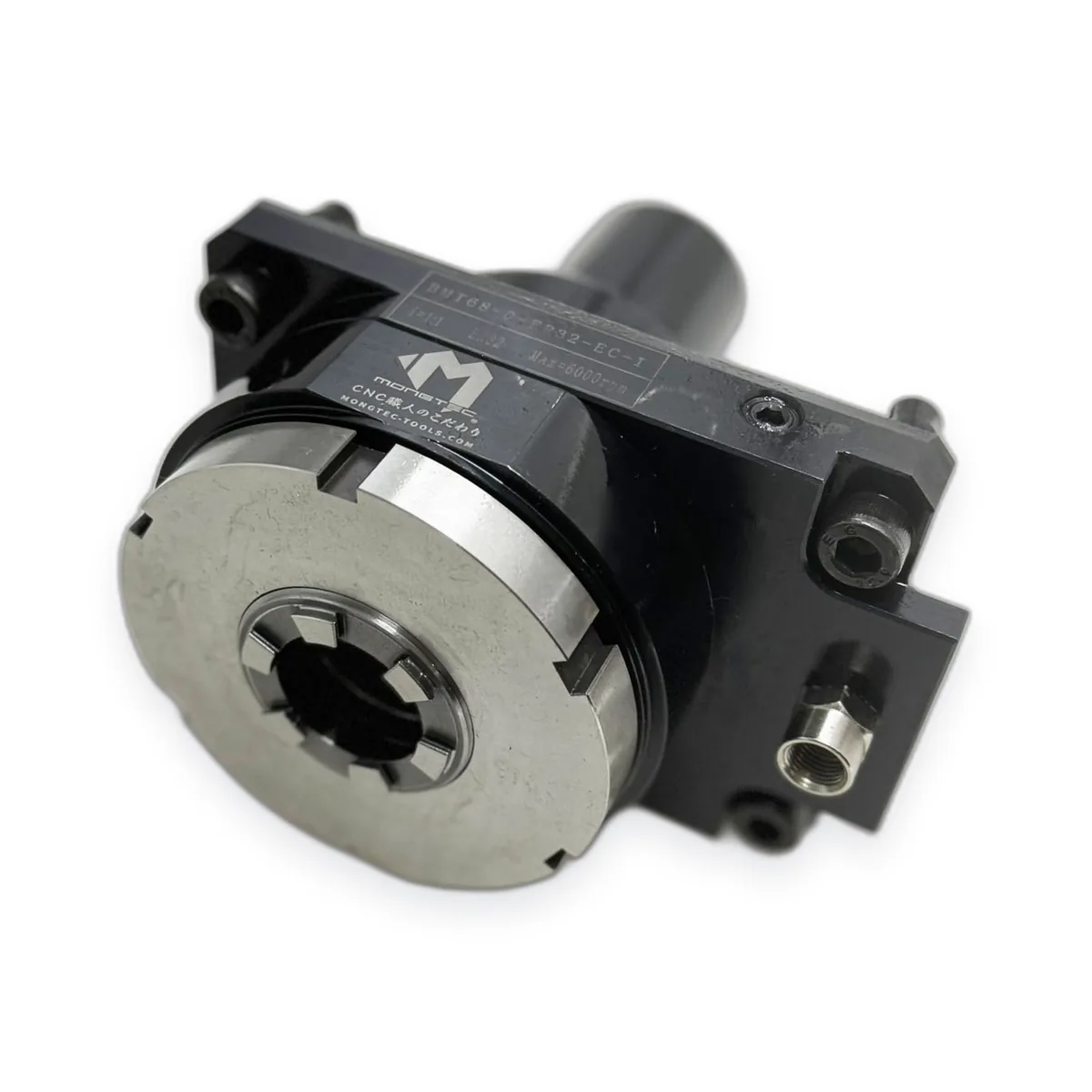
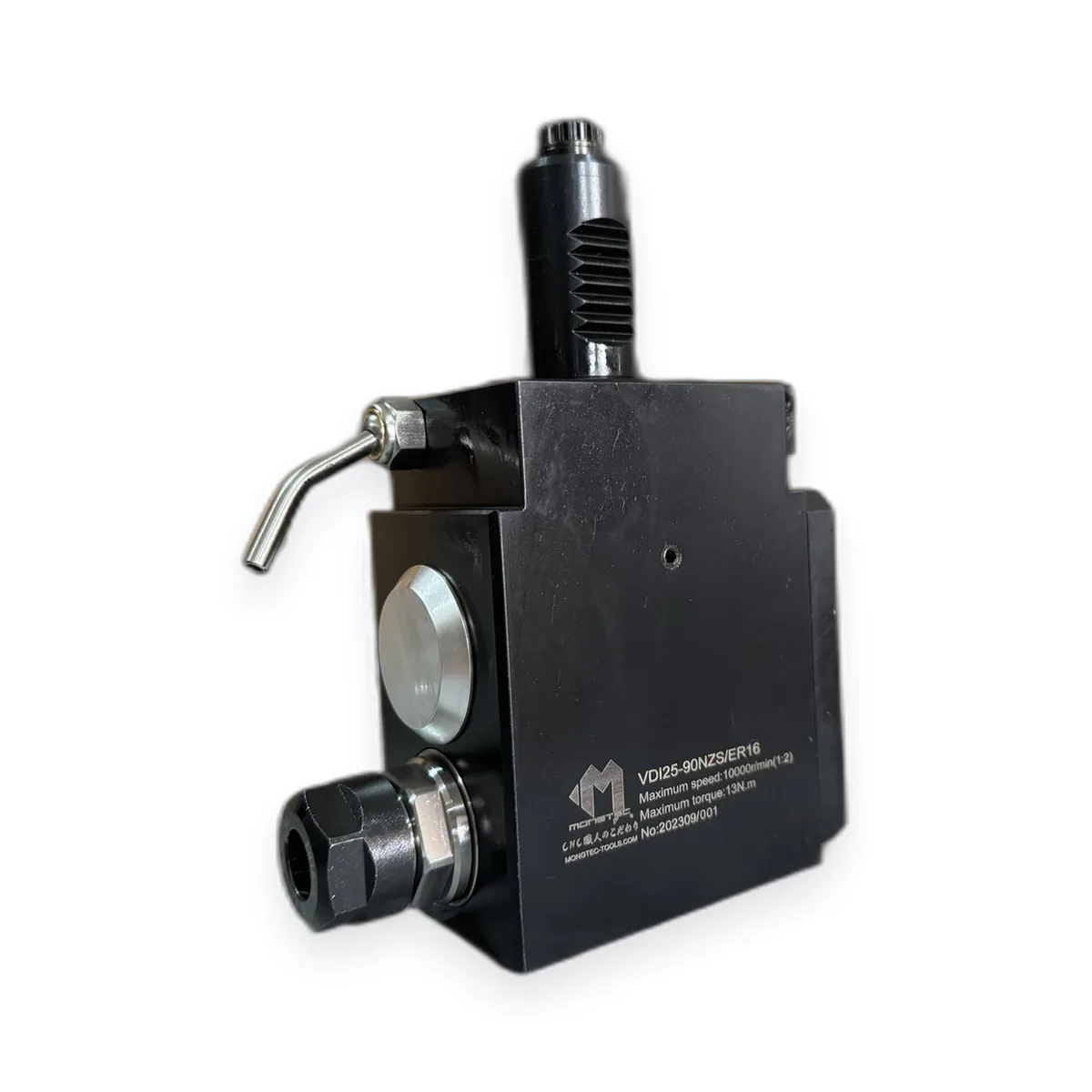
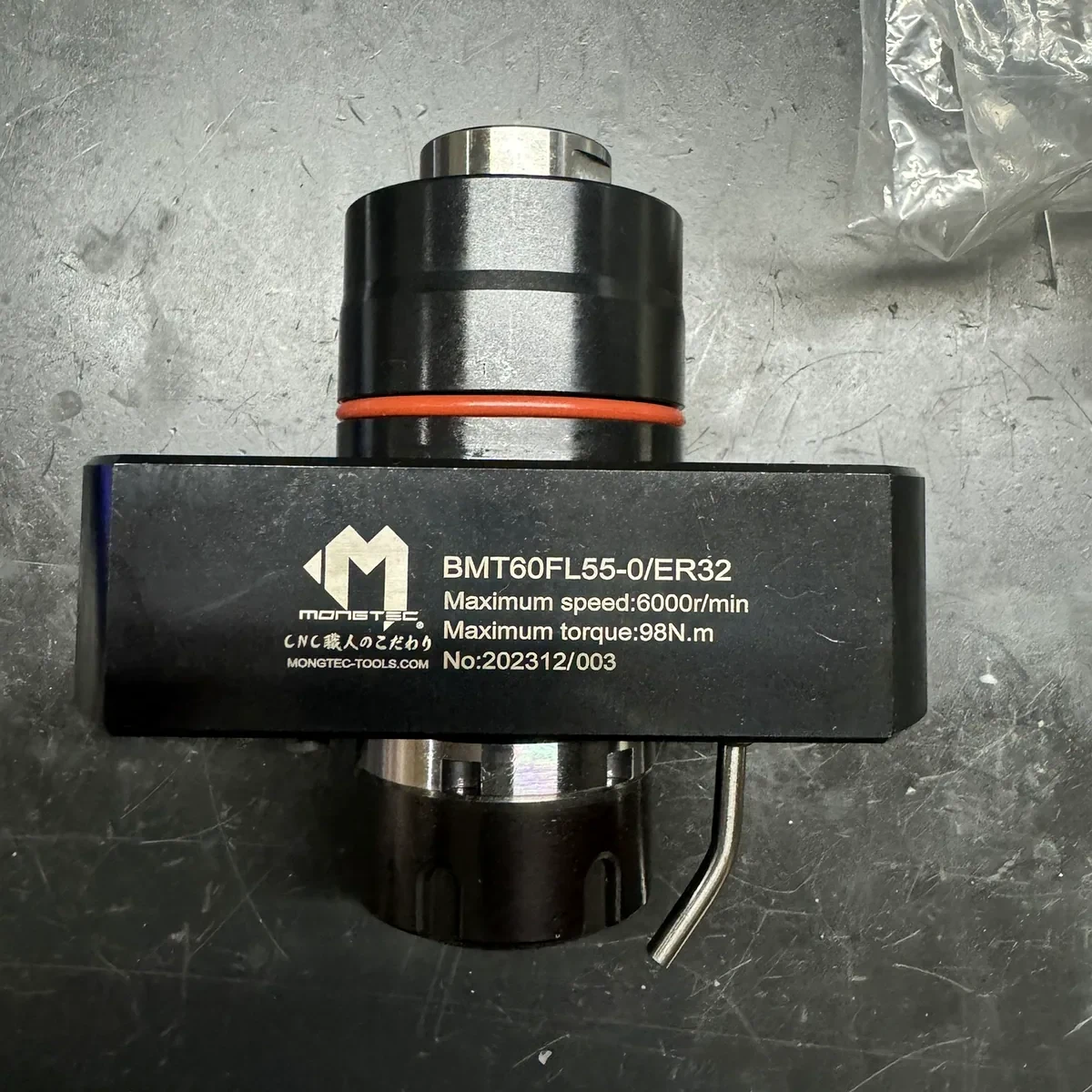
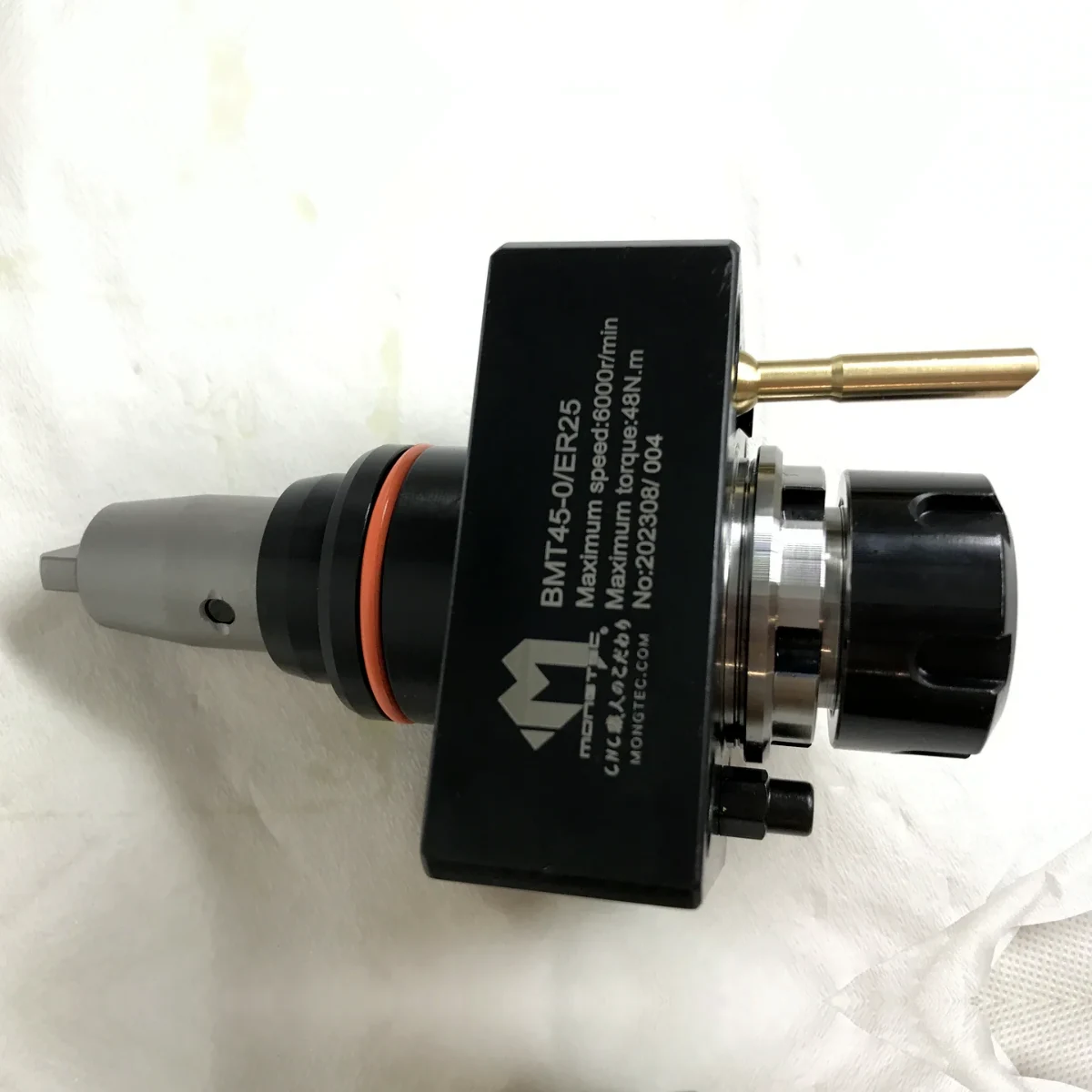
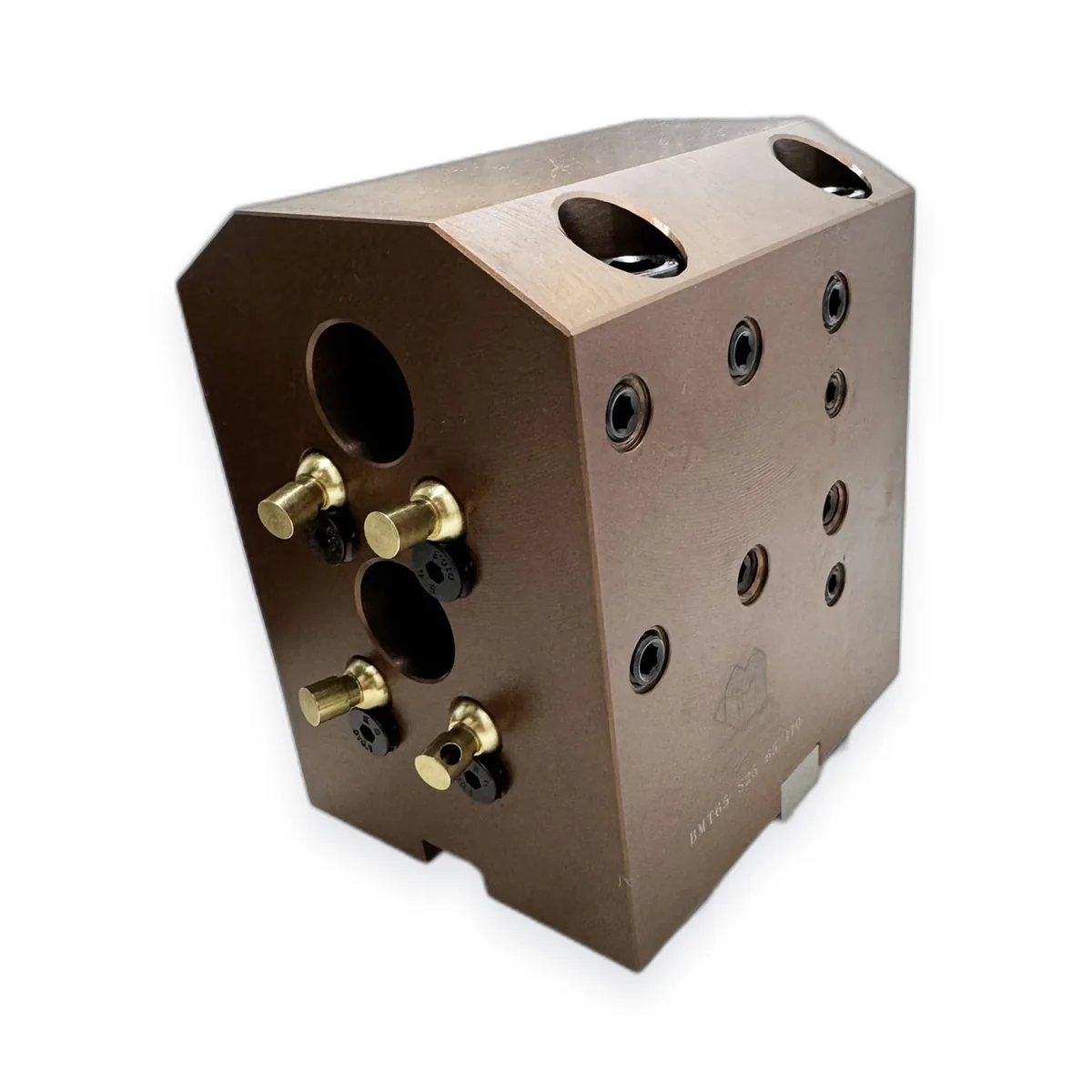
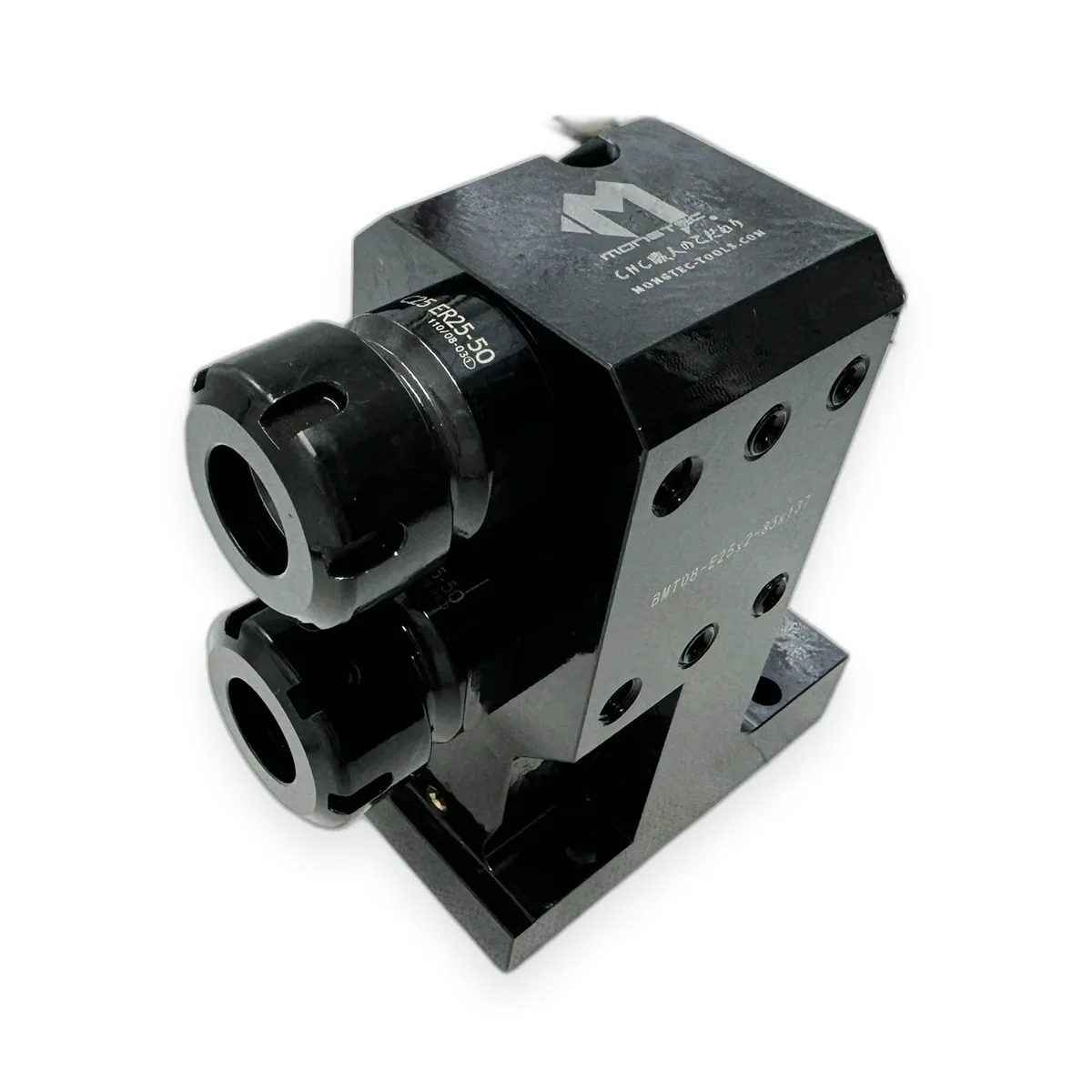
A driven tool holder (also called live tooling, rotary tool holder or a driven unit) mounts on a CNC lathe turret and carries its own rotary drive from the turret's internal driveshaft. It lets the lathe mill, drill, tap and slot in the same setup that turns the part — work that would otherwise need a second operation on a machining centre.
A static holder has no drive; it simply clamps a turning tool or boring bar. A typical turn-mill turret carries a mix of both.
The commercial point: every driven tool position you use correctly removes a setup, a transfer and a queue. That is why the selection has to be right the first time.
Driven holders carry their own rotary drive from the turret; static holders simply clamp a turning tool. A typical turn-mill turret carries both.
This is not a “which is better” question. Your turret decides it. The choice was made when the machine was bought. This table is for identifying which side you are on:
| VDI | BMT | |
|---|---|---|
| Standard | DIN 69880 — a published international standard | Industry de-facto standard. Neither ISO nor DIN has published it |
| Mounting | Cylindrical shank into a round turret bore, clamped from the side against a serrated face | Flat face against the turret, four bolts, located by a key |
| Common sizes | VDI16 / 20 / 25 / 30 / 40 / 50 / 60 | BMT45 / 55 / 65 / 75 / 85 |
| Rigidity | Depends on shank clamping | Large face contact — generally higher rigidity under milling load |
| Changeover | Single clamping point, faster to swap | Four bolts, slower to swap |
| Interchange risk | Low — same designation, same shank | Same name does not guarantee same dimensions. Verify per machine |
| Typically found on | European-built lathes and many disc-type turrets | DN Solutions (Doosan), Hyundai WIA, Mazak, Okuma, Haas and most turn-mill centres |
New: BMT bolt patterns by machine builder — a reference table of 38 turret bolt patterns and the machines that use them.
Still not certain? A photo of the turret face plus the machine model is enough for our engineering team to identify it.
Once the interface is fixed, these five decide which article number you need. Have them ready and a quote takes one round trip instead of four.
| Specification | Why it decides the choice |
|---|---|
| Operation & orientation | Axial (face work), radial (OD work) or angle head. This determines the holder family before anything else. |
| Tool interface | Collet size (ER11 to ER50), side-lock, arbor or shrink fit. Set by the cutter you intend to run. |
| Speed and gear ratio | 1:1 is standard. Speed increasers raise rpm for small-diameter cutters; reducers raise torque for heavy milling. Published Mongtec driven-tool line runs 6,000–12,000 rpm standard, up to 32,000 rpm with a speed increaser. |
| Torque | Sets what the holder can actually cut, not just spin. Published line capability up to 160 Nm; the rating for a specific unit is confirmed at quotation. |
| Coolant | External, internal or through-coolant, up to 100 bar. Get this wrong and tool life in deep holes collapses, whatever the holder cost. |
Specification ranges published by Mongtec Precision; the rating for any individual unit is confirmed by engineering at quotation.
Machine shops rarely lose money on the price of a holder. They lose it on:
| What goes wrong | What it costs |
|---|---|
| Interface does not mount | Re-order plus a second lead time, with the job already scheduled |
| Torque under-specified | Chatter, poor finish, scrapped parts, shortened holder life |
| Speed under-specified | Small cutters run below their effective range — tool cost per part rises |
| Wrong coolant configuration | Tool life collapses in deep holes; unplanned stops to clear chips |
| Runout out of tolerance | Dimensional drift across the batch, rework, and a QC argument |
Once you know the interface, the article numbers are published — browse them directly:
| Interface | Published article numbers |
|---|---|
| VDI30 | 62 driven tool holders |
| VDI40 | 75 driven tool holders |
| VDI50 | 16 driven tool holders |
| BMT55 | 19 driven tool holders |
| BMT65 | 11 driven tool holders |
| All interfaces (VDI16–60, BMT45–85) | 228 driven tool article numbers |
| PSC / polygon shank (ISO 26623) | 385 article numbers, PSC32–PSC100 |
Or start from your machine: browse 409 lathe models by brand — each page lists the declared turret interface and the matching Mongtec range.
VDI and BMT are open machine-side interfaces, so changing tooling supplier requires no modification to the turret at all. Mongtec publishes 36 competitor cross-reference pages covering WTO, Benz, Heimatec, EWS Weigele, Sandvik Coromant and others. Send the part number you are replacing plus the machine model and engineering will confirm the equivalent.
All third-party brand names are the property of their respective owners. Mongtec Precision Inc. is an independent tooling brand and is not affiliated with, endorsed by, or a licensee of any of them; names are used only to identify interface compatibility.
The more of this you can supply, the faster the answer. Anything you do not know, we work out from the machine model — an incomplete enquiry is still worth sending.
Mongtec engineering verifies interface dimensions, clearance, drive coupling and the correct article code for your specific machine before quoting — so what you receive is a holder that mounts, not a holder that matches a label.
Request a quote — engineering confirms the interface before you orderLook at the turret face. VDI holders drop into a round bore and are locked by a serrated clamping screw from the side. BMT holders sit flat against the turret face and are held by four bolts around a locating key. If you cannot see the turret, check the machine nameplate and the builder's spec sheet, or pull one existing holder and look at the shank. Mongtec also publishes the declared turret interface for 409 lathe models — find your machine, or send a photo of the turret face with the machine model and Mongtec engineering will identify it.
Not necessarily. VDI is standardised in DIN 69880, so a VDI40 shank is a VDI40 shank. BMT is an industry de-facto standard, not an ISO or DIN standard — the bolt pattern, locating key position and drive coupling can differ between machine builders even when both are labelled BMT55. This is the single most common ordering error. Mongtec confirms the actual turret dimensions before quoting rather than shipping against the label.
Yes. VDI and BMT are open machine-side interfaces — nothing on the turret needs to be modified to change tooling supplier. Mongtec publishes 36 competitor cross-reference pages covering WTO, Benz, Heimatec, EWS, Sandvik Coromant and others. Send the part number you are replacing and the machine model, and Mongtec engineering will confirm the equivalent.
Machine brand and model, turret interface if you know it, the operation (axial, radial, angle), tool shank or collet size, required speed and torque, and coolant type (external, internal or high pressure). If you are replacing an existing holder, the old part number and a photo of the turret face are usually enough. Anything you do not know, Mongtec engineering works out from the machine model.
Yes — every driven tool holder ships with an individual inspection report covering the measured values for that unit, not a generic batch certificate.
Angle heads for machining centres — BT30, BT40, BT50, HSK-A63, HSK-A100 right-angle machining heads.