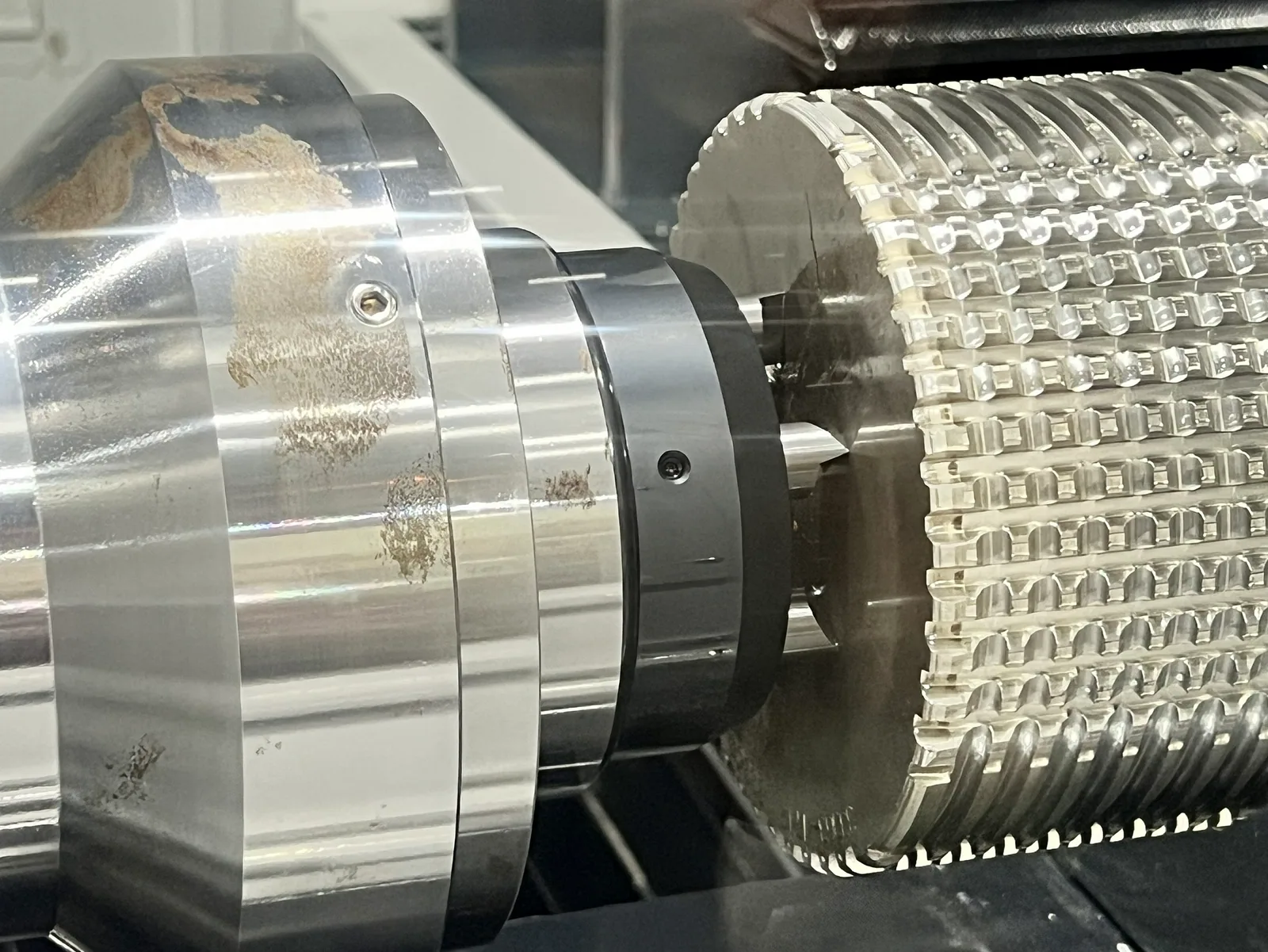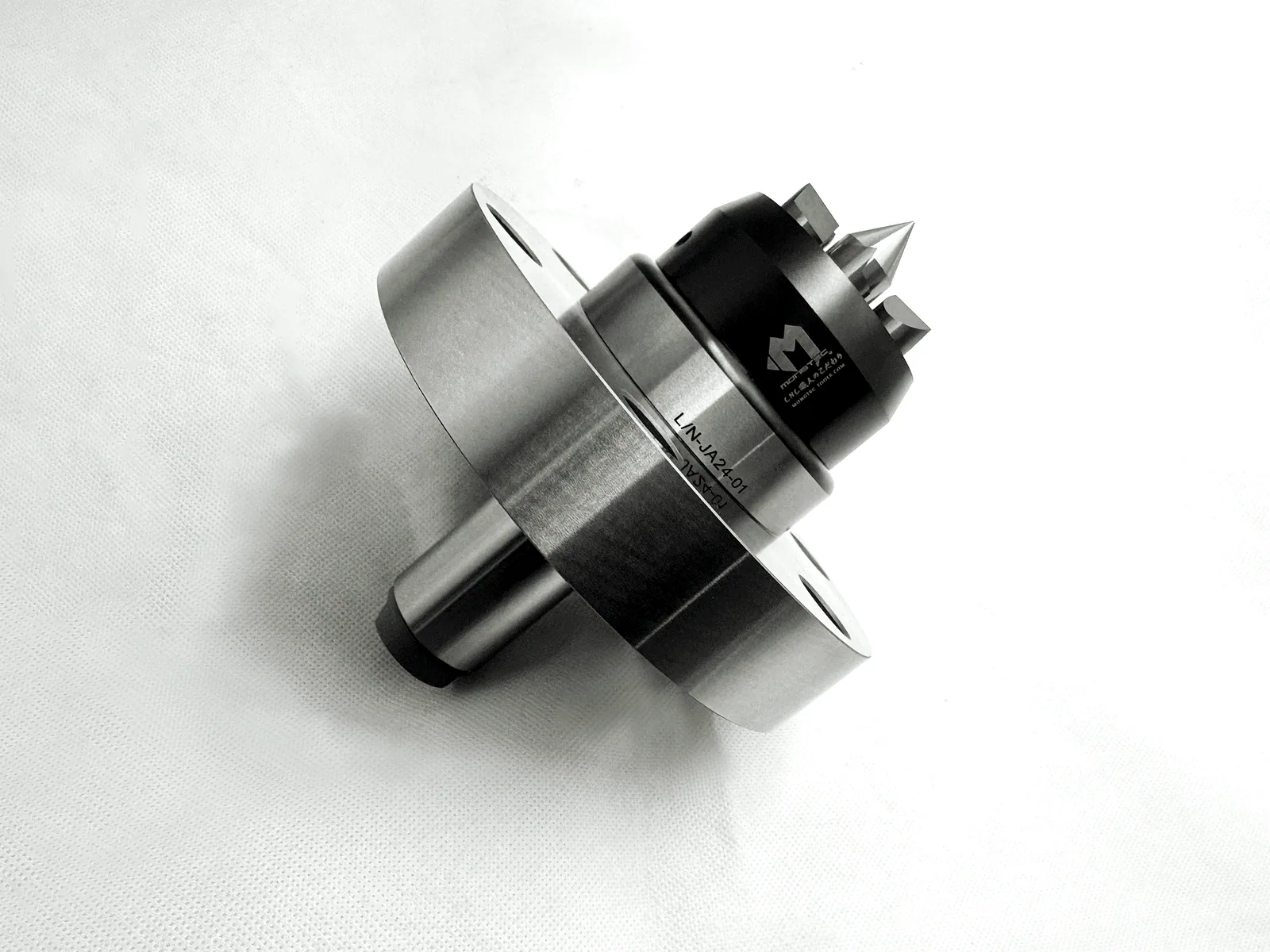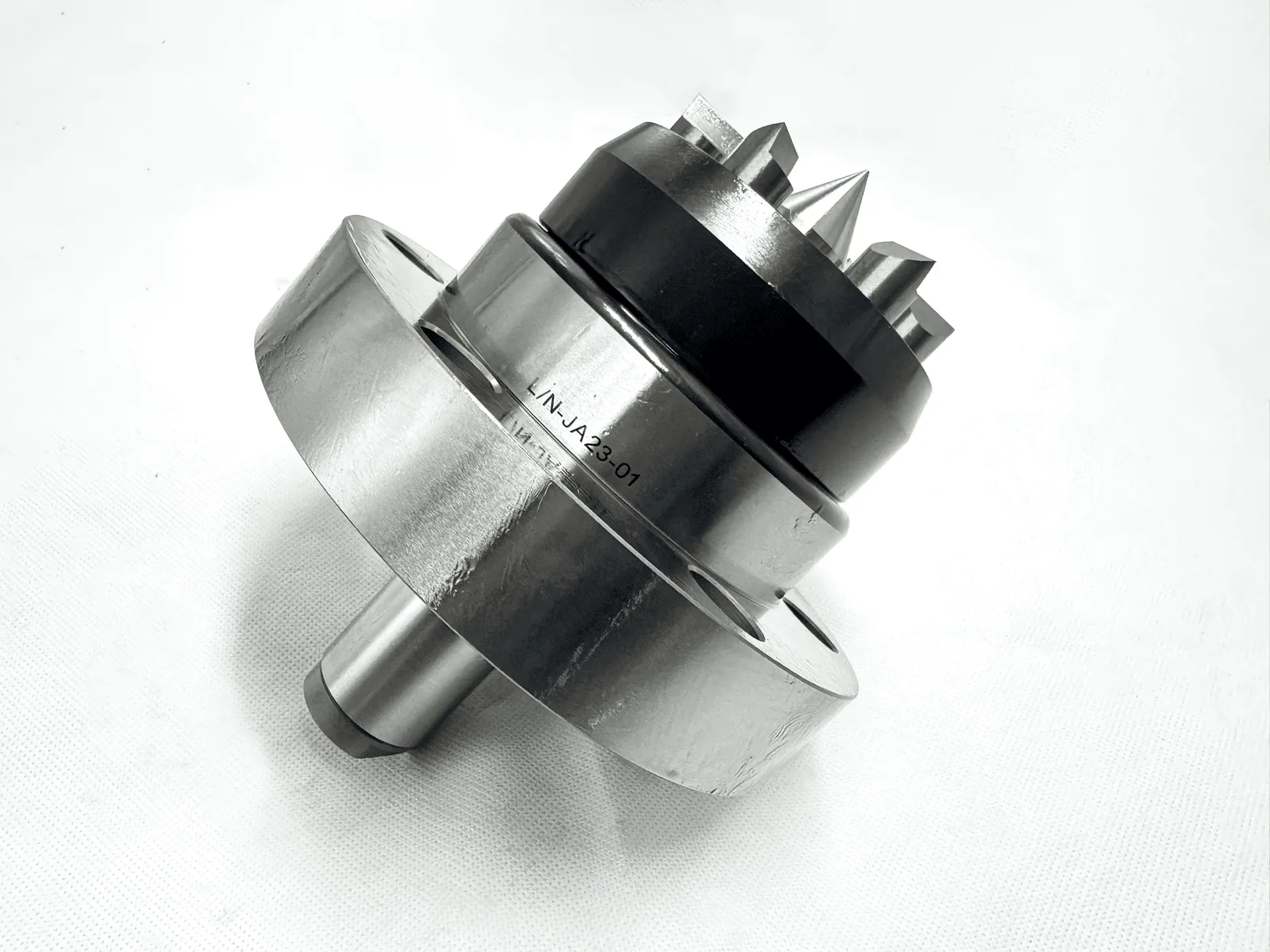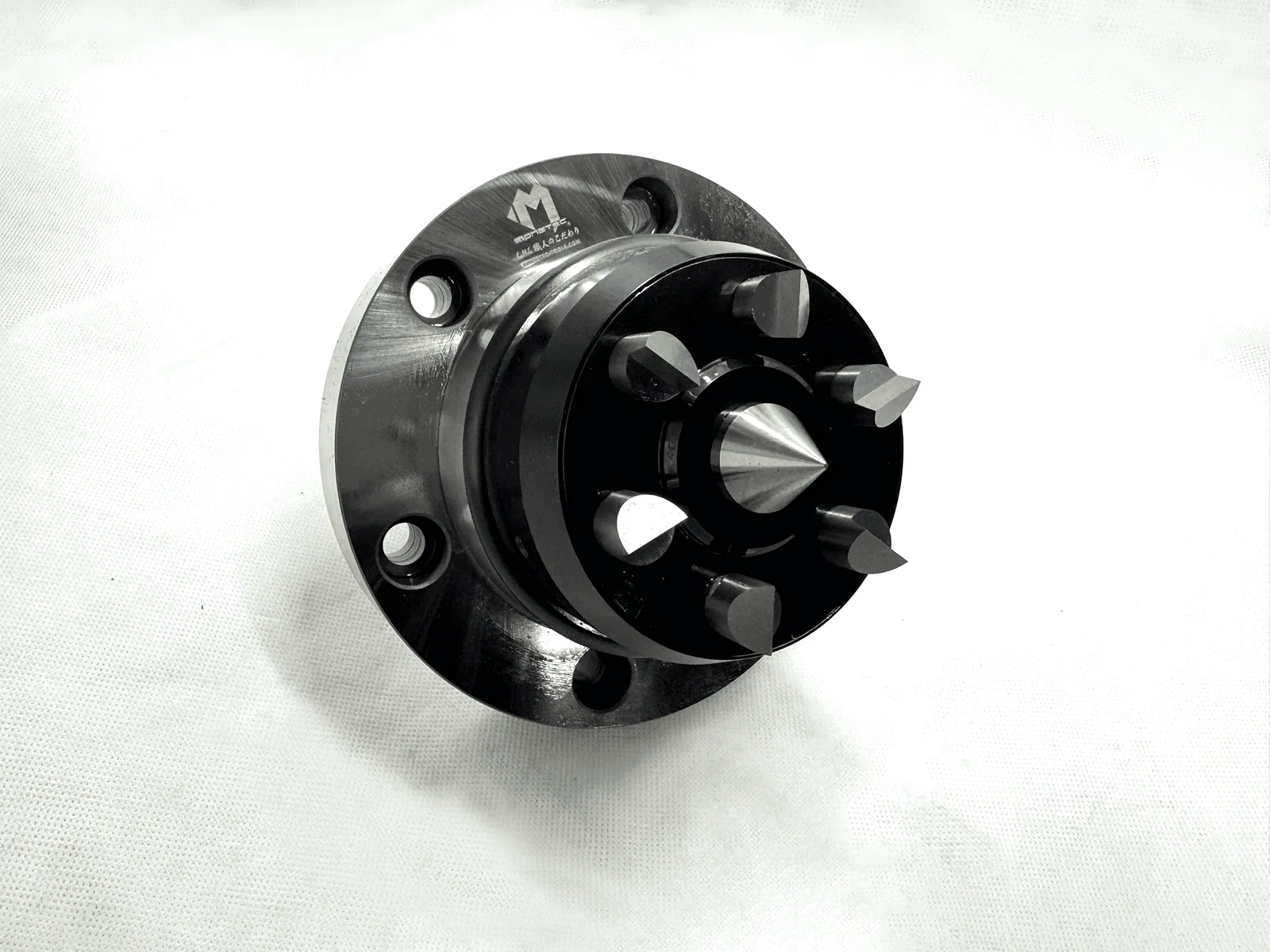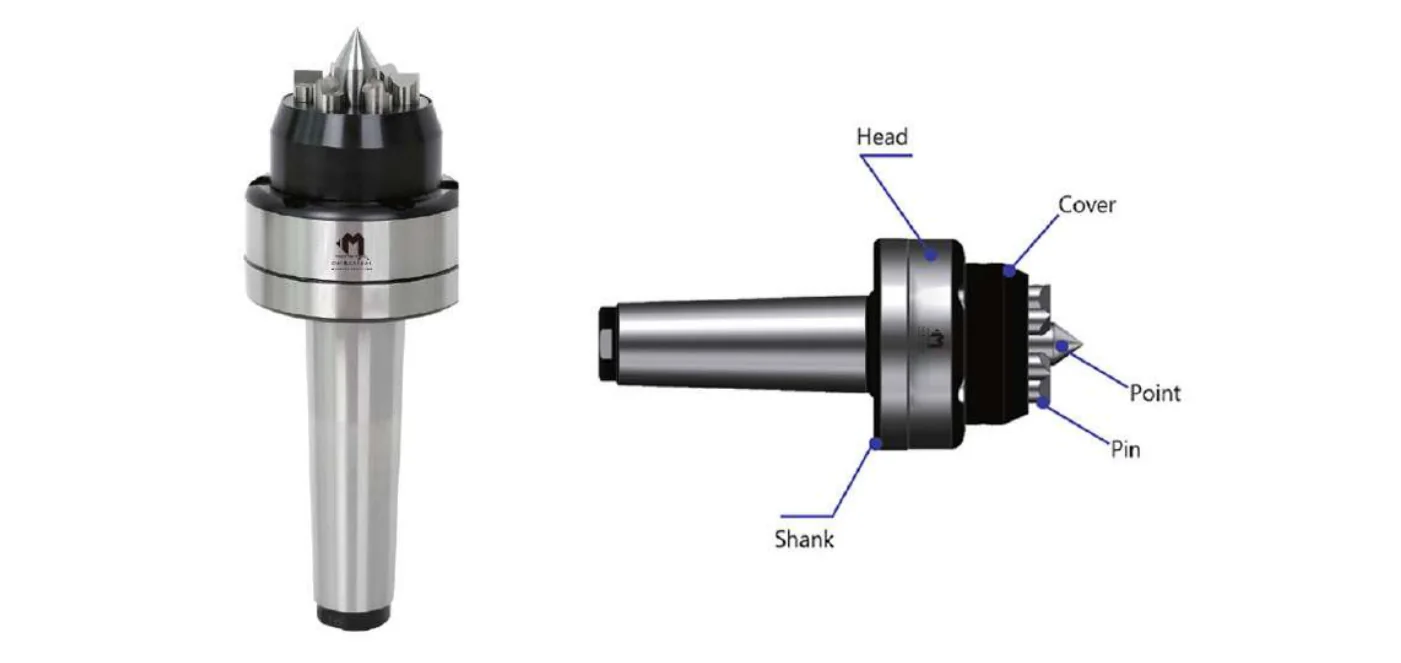
A face driver grips the end face of the workpiece with hardened pins and drives it from there, so the whole length of the shaft is exposed and turns in a single clamping. That is the entire point: one setup instead of two, and no re-clocking in the middle.
MFC and MFCST face drivers — 15 model numbers, MT3 / MT4 / MT5 and straight shank, work sizes Ø18–100 mm, rated 55 to 100 kg, with full catalogue dimensions.
| Model | Morse taper | Workpiece | Max load |
|---|---|---|---|
| MFC10 | MT3 / MT4 / MT5 | ø18 – ø38 | 55 kg |
| MFC20 | MT3 / MT4 / MT5 | ø27 – ø55 | 60 kg |
| MFC30 | MT3 / MT4 / MT5 | ø39 – ø75 | 70 kg |
| MFC40 | MT4 / MT5 | ø55 – ø100 | 100 kg |
| MFC | Morse taper shank, the standard range |
|---|---|
| MFCST | Straight shank — for machines without a Morse taper tailstock |
| MFCDST | Self-compensating. Corrects a tapered end face up to 1.5 mm with even pressure in every direction, which extends pin and point life and cuts maintenance |
| One clamping | The whole shaft is turned in one setup — no second operation, no re-alignment error |
|---|---|
| Self-seating accuracy | The driver adjusts itself to the surface of the material |
| Wear | Hardened pins and carbide points, built for repeat and volume production |
| Fits most machines | Morse taper and straight shank versions cover nearly any NC lathe |
All eleven parts of an MFC face driver can be bought separately — cover, point, pins, roller, head, urethane, shank, spring and end cover. A worn pin does not mean a new face driver.
Body diameters (D, D1), gauge lengths (L2, L1) and the set-screw thread (G) are in the printed catalogue and are supplied with the quotation.
Special accessories → · CNC mill tool holders →