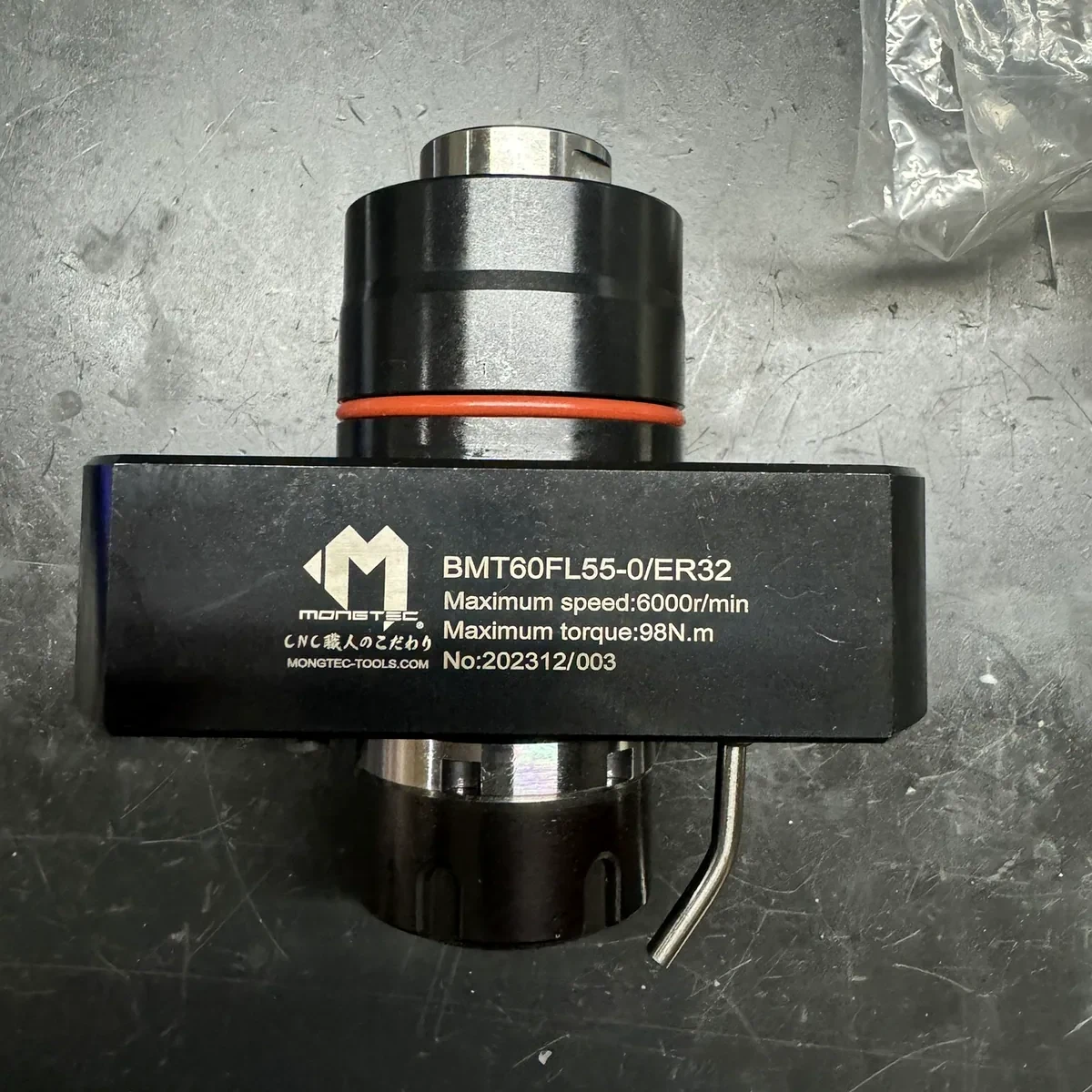
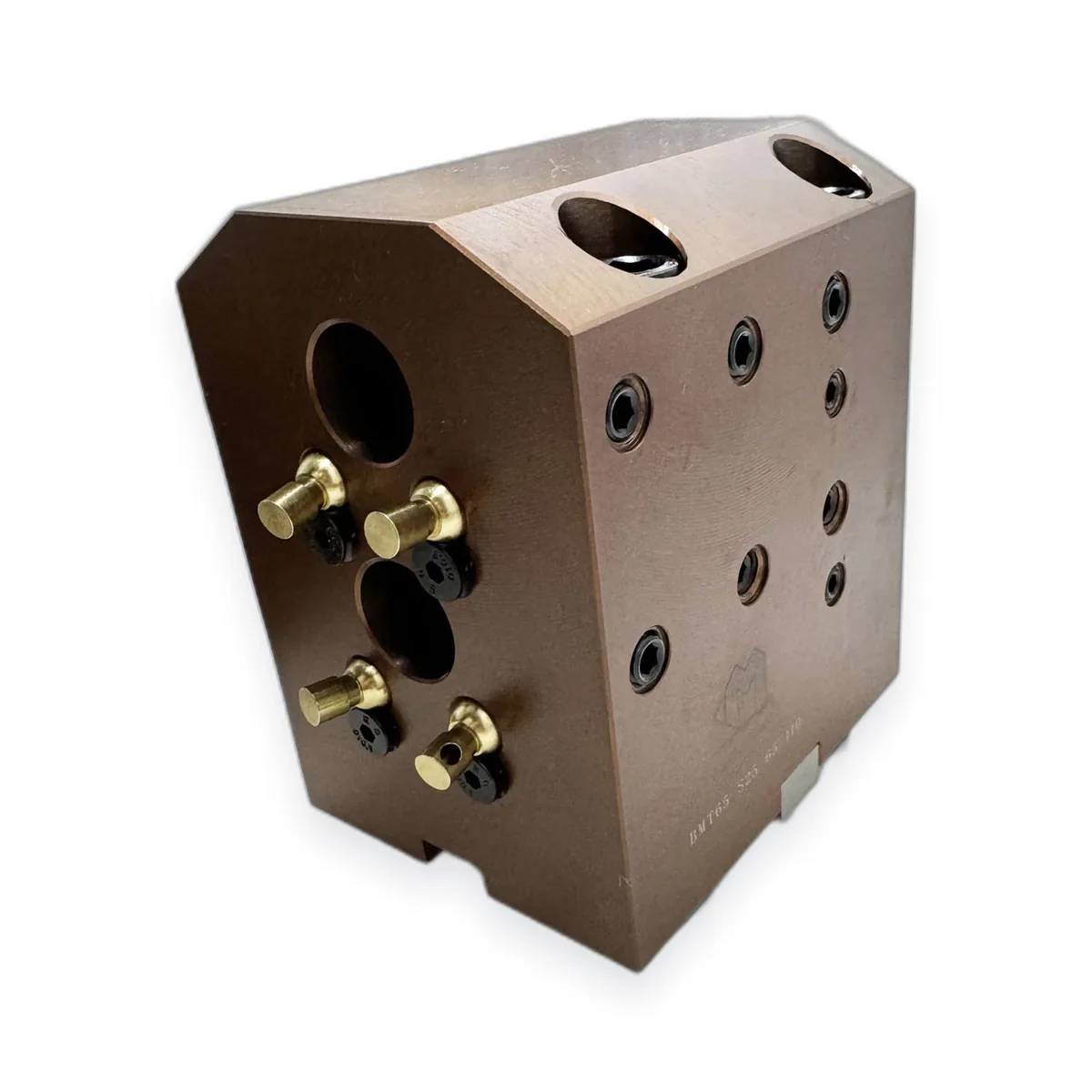
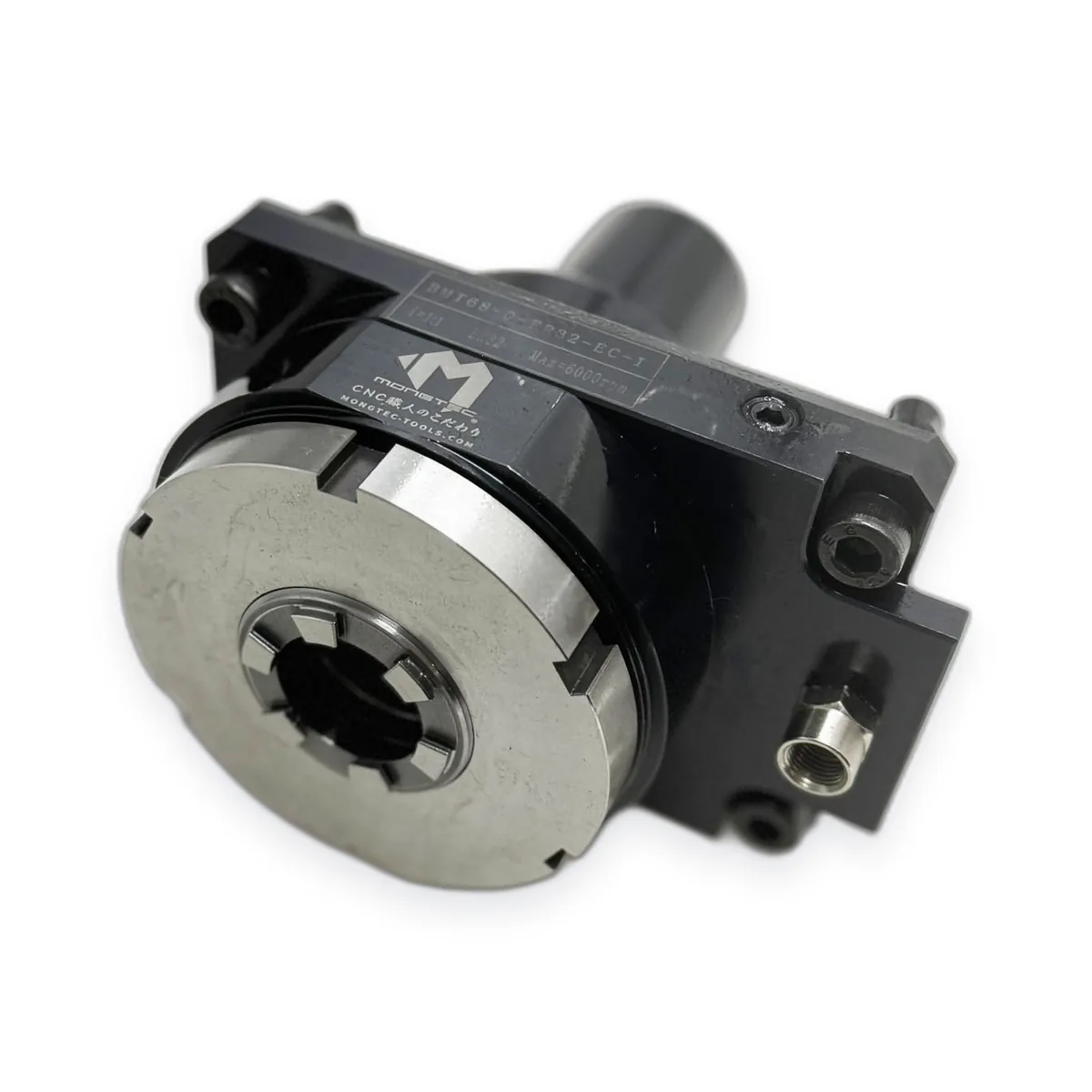
A static tool holder clamps a turning tool or boring bar and never moves — the workpiece turns and does the cutting. A driven tool holder has its own spindle, powered by the turret, so a drill, tap or end mill rotates while the main spindle is stopped or indexed. Almost every turn-mill turret carries both. The question is not which is better, but which operations need which.
| Static holder | Driven holder | |
| What rotates | The workpiece | The cutter, inside the holder |
| Operations | OD and ID turning, boring, facing, grooving, threading | Drilling and tapping off-centre, cross holes, flats, slots, keyways, milling |
| Inside | A solid body and a clamping seat | Bearings, gears, a drive coupling and seals |
| Rigidity | Highest — the right station for heavy roughing | Limited by the holder’s bearings and rated torque |
| Price | Lower | A multiple of a static holder for the same turret |
| Maintenance | Practically none | Bearings and seals wear; coolant ingress is the usual cause of failure |
| Limit | The insert and the machine | The holder’s rpm and torque rating |
| Static | OD holders for square-shank turning tools, ID holders for boring bars, face holders that present the tool to the part face, and double-OD holders. Machine-specific tool blocks exist for turrets that are not BMT or VDI. |
|---|---|
| Driven | Axial and radial holders, offset and retracted versions, double-output and adjustable-angle holders, speed increasers and broaching units. |
Mongtec publishes 49 static holders across BMT40 to BMT75 in four types, 54 machine-specific lathe tool blocks, and 228 driven tool holder article numbers for VDI and BMT turrets. Both come in the same turret interface, so one confirmed machine model covers both. Static holders → · Driven holders →
Mongtec confirms fit and quotes from four details. Email them to info@mongtec.com or use the quote form — we reply within one working day.