Why live centers fail, and it is usually not the point
A center is the part nobody thinks about until it fails, and then it costs a shift. When one is replaced, the point usually still looks serviceable. The bearing is what went.
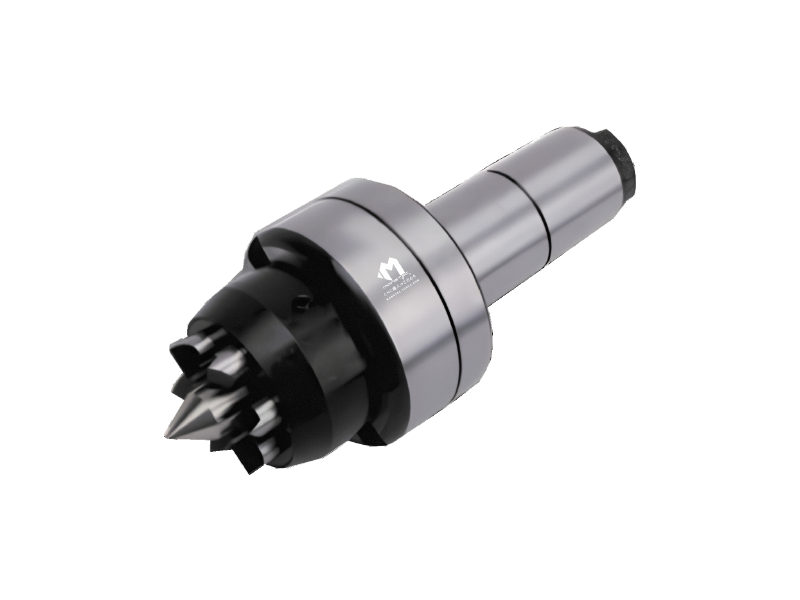
A center is the part nobody thinks about until it fails, and then it costs a shift. When one is replaced, the point usually still looks serviceable. The bearing is what went.
Coolant. It gets past the seal, mixes with the grease, and the bearing loses its film. Runout goes first, then noise, then the center seizes or starts to wobble under load. The point can look almost new at that stage.
This is why the seal specification matters more than the tip material for most shops. Mongtec centers use a dedicated oil seal against coolant and debris; on some models it is a contactless seal, which does not wear against the shaft.
| Sealing | Is it specified at all? Contact or contactless? |
|---|---|
| Bearing arrangement | Mongtec uses a triplex bearing structure — three bearings rather than two, for rigidity and life. |
| Runout | Live center max 0.003 mm; dead center max 0.002 mm. |
| Shaft hardness | HRC 58–62. |
| Point | Carbide at HRA 90–91, or hardened steel. |
| Load and speed | Rated per Morse taper — see below. |
| Morse taper | Max load | Max speed |
|---|---|---|
| MT2 | 500 kg | 5,000 rpm |
| MT3 | 500 kg | 5,000 rpm |
| MT4 | 800 kg | 3,800 rpm |
| MT5 | 1,500–2,000 kg | 3,000 rpm |
| MT6 | 2,500–3,500 kg | 2,800 rpm |
Running a center near its speed limit with a heavy workpiece is the second most common way to shorten its life.
Two-level and three-level angular points exist to keep the center out of the way of the turning tool. If your tool is fouling the center on face work, that is a geometry problem, not a clearance you have to live with.
Nut-type centers let you replace the point alone. If you are consuming points on abrasive material, that is a much cheaper consumable than a whole center.