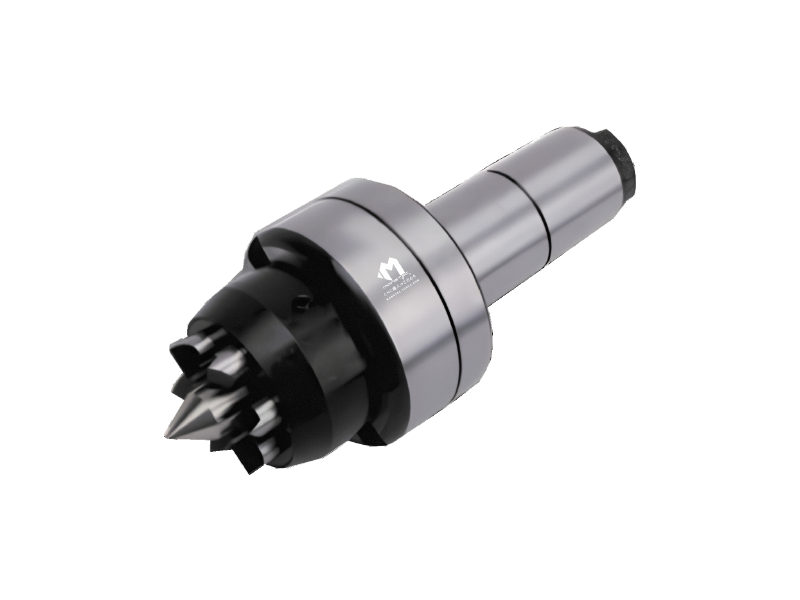
If you turn shafts and you are doing it in two setups, the second setup is where your concentricity error comes from. A face driver removes it by driving the workpiece from the end face instead of from a chuck.
How it works
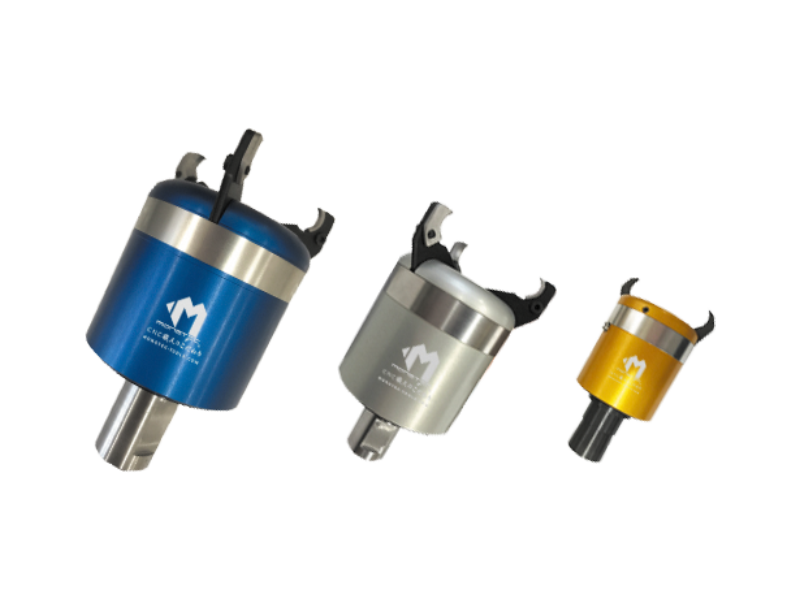
Face driver — hardened pins bite the end faceCoolant grippers — pull the bar while coolant is on
Hardened pins bite into the end face of the workpiece. The centre point locates it, the pins transmit the torque, and the entire length of the shaft is free for the tool. There is no chuck in the way, so you turn the whole part in one clamping.
The pins self-adjust to the surface of the material, which is why a saw-cut or forged face is usually acceptable without preparation.
Why the second setup is the expensive one
Every re-clamping introduces a new datum. On a shaft, that shows up as concentricity error between the features turned in setup one and setup two. You can chase it with a steady rest and careful indicating, or you can not create it.
The time argument is the obvious one. The accuracy argument is the one that usually decides it.
Mongtec MFC range
Model
Morse taper
Workpiece
Max load
MFC10
MT3 / MT4 / MT5
ø18–ø38
55 kg
MFC20
MT3 / MT4 / MT5
ø27–ø55
60 kg
MFC30
MT3 / MT4 / MT5
ø39–ø75
70 kg
MFC40
MT4 / MT5
ø55–ø100
100 kg
Three versions
MFC
Morse taper shank — the standard range.
MFCST
Straight shank, for machines without a Morse taper tailstock.
MFCDST
Self-compensating. Corrects a tapered end face up to 1.5 mm with even pressure in every direction. Pin and point life goes up and maintenance goes down.
The part that matters after the sale
All eleven components of an MFC face driver can be bought separately — cover, point, pins, roller, head, urethane, shank, spring, end cover. A worn pin does not mean a new face driver. Ask for the parts list when you order, not when something wears out.